Main sewer lateral clogs and toilet overflows push Category 3 black water across floors fast. Call (844) 477-0896 24/7 for immediate Clarksville containment.
24/7 dispatch reaches Clarksville homes via I-24, US-41A, US-79, and 101st Airborne Division Pkwy.
Why Main Sewer Backups Happen Across Clarksville
Clarksville Gas & Water operates roughly 896.5 miles of gravity sewer mains, 258 pump stations, and 21,620 manholes across the city. Yet the private sewer lateral running from your home foundation out to the street main belongs strictly to the property owner.
In historic neighborhoods near Downtown Clarksville, Franklin Street, and New Providence (37040), older clay and cast-iron laterals face mature oak and maple roots. Across newer subdivisions along Madison Street (37043) and Fort Campbell Boulevard (37042), karst ground settling and accumulated kitchen grease block lines without warning. Calling Clarksville sewage cleanup right away stops raw waste from soaking through hallways and subfloors.
Immediate Containment Steps in the First Five Minutes
Quick action protects your family and limits tear-out while dispatch is en route:
Pause all household water: Stop flushing toilets, running sinks, or draining appliances until the main line clears.
Close toilet shutoff valves: Turn the valve behind an overflowing toilet clockwise, or lift the tank lid and press the flapper shut.
Block off contaminated floors: Keep children and pets completely away from wet bathrooms, hallways, and utility rooms.
Shut off central air or heat: Stop return vents from pulling airborne contaminants into clean bedrooms.
Cut power to wet ceilings: If an upstairs bathroom overflows into downstairs light fixtures, flip that breaker off immediately.
How Crews Handle Category 3 Sewer Backup Cleanup
Independent local technicians treat main line overflows with commercial extraction and verified moisture tracking:
Zone isolation: Hang poly containment barriers to keep clean rooms untouched.
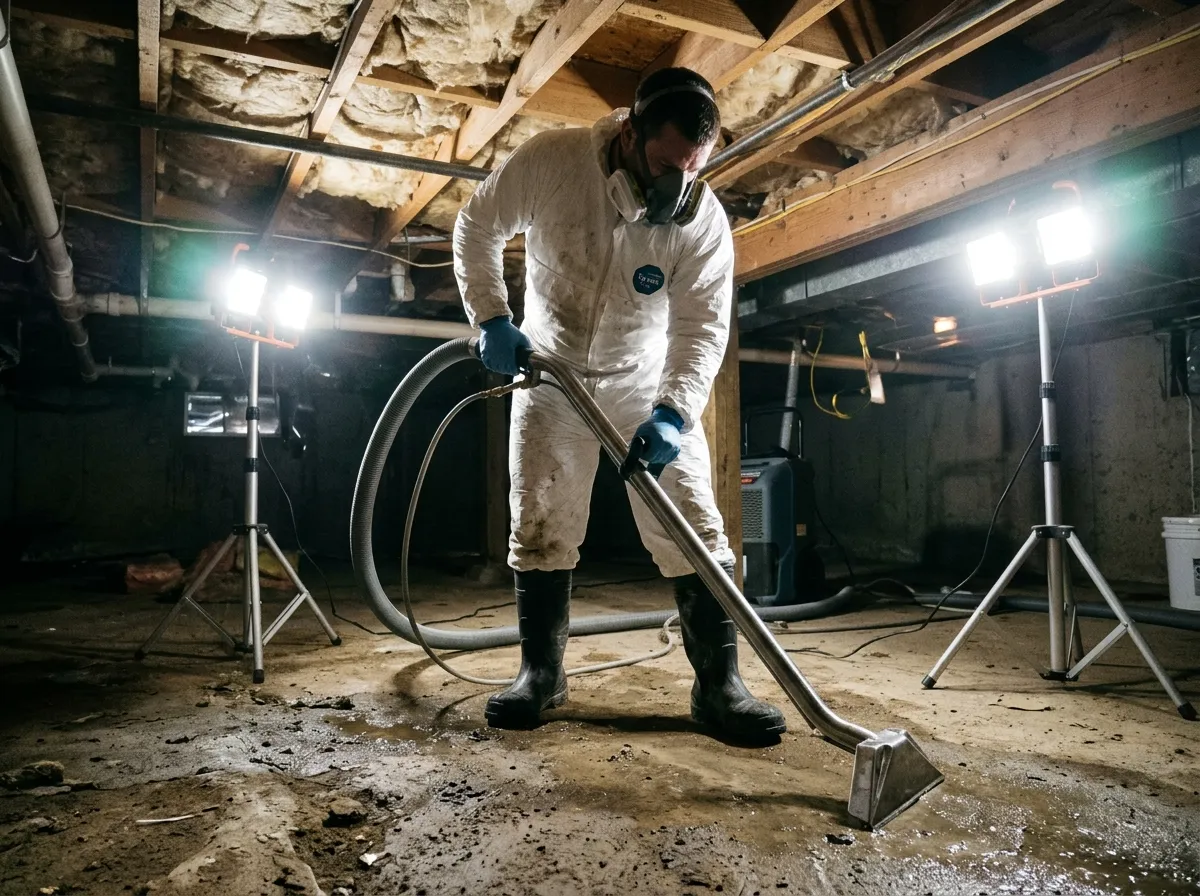
Deep black-water extraction: Pump standing liquid out of bathrooms, hallways, closets, and adjoining bedrooms.
Baseboard and porous tear-out: Detach wet trim, remove contaminated carpet pad, and inspect wall cavities with moisture meters.
Subfloor sanitization: Scrub and disinfect concrete slabs, plywood subfloors, and tile grout with EPA-registered antimicrobials.
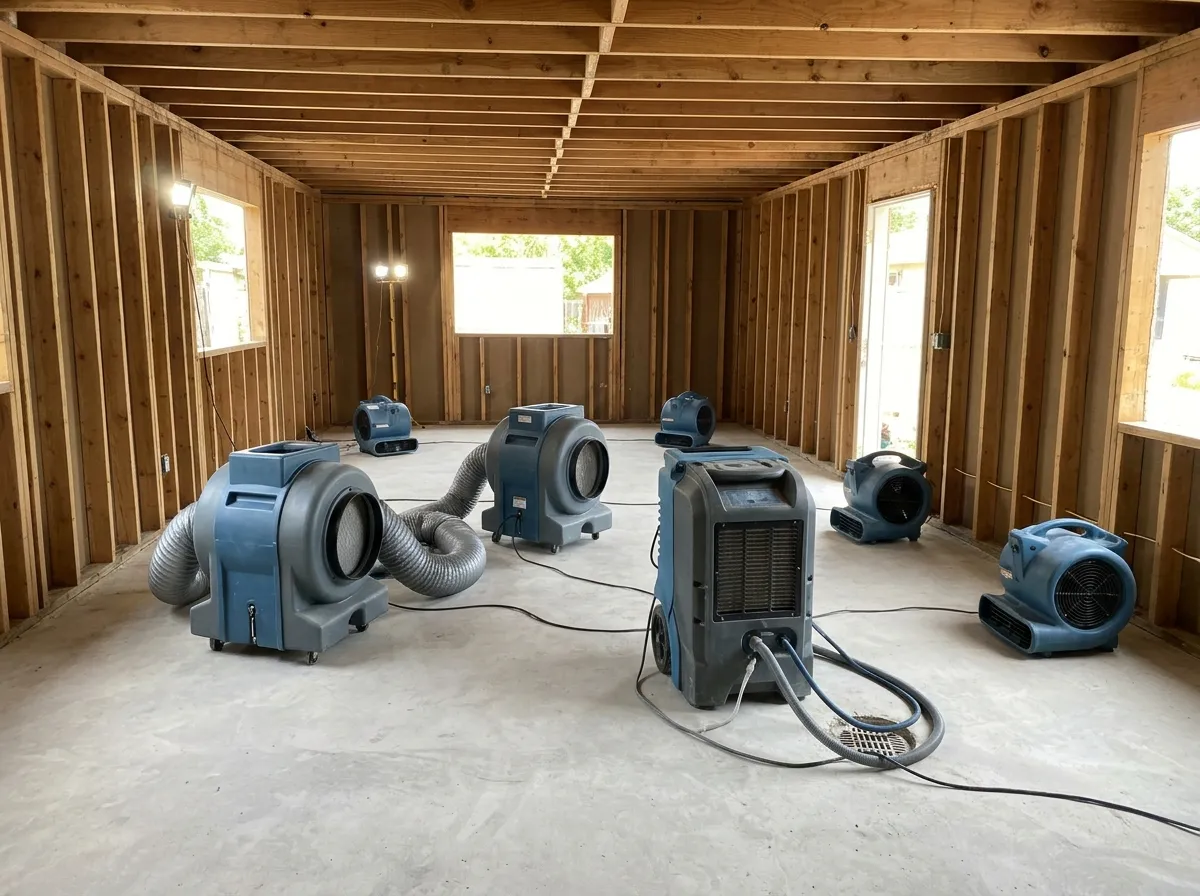
Structural drying: Run commercial dehumidifiers and axial fans until framing hits verified dry targets.
Insurance Documentation for Main Sewer Overflows
Standard homeowners policies often separate sudden supply-line breaks from main sewer backups. Letting responding crews capture clear source photos, itemized tear-out notes, and daily moisture logs gives your adjuster exact records from day one. For deeper odor control after pumping, review sewage sanitization and odor removal.
Why do Clarksville sewer laterals back up so often after heavy rain?
Clarksville sits on karst limestone and clay soil. Heavy rain saturates ground channels, shifts older clay or cast-iron joints, and lets tree roots or groundwater overwhelm private lateral pipes.
What should I shut off first during a toilet or tub sewer backup?
Stop flushing every toilet, turn off washing machines and dishwashers, and turn the toilet supply valve clockwise if fresh water is still running. Then shut off your HVAC fan to stop odors from spreading.
Why is household bleach not enough after a sewer backup?
Store-bought bleach only sits on top of glazed tile. Raw sewage slips under vinyl planks, beneath vanity toe-kicks, and into porous drywall edges where mops cannot sanitize.
3-Step Containment & Drying Timeline
Raw sewage spreads pathogens and moisture across floors quickly. Local restoration crews follow three clear stages from arrival to verified dry framing.
01
Emergency Extraction & Waste Removal
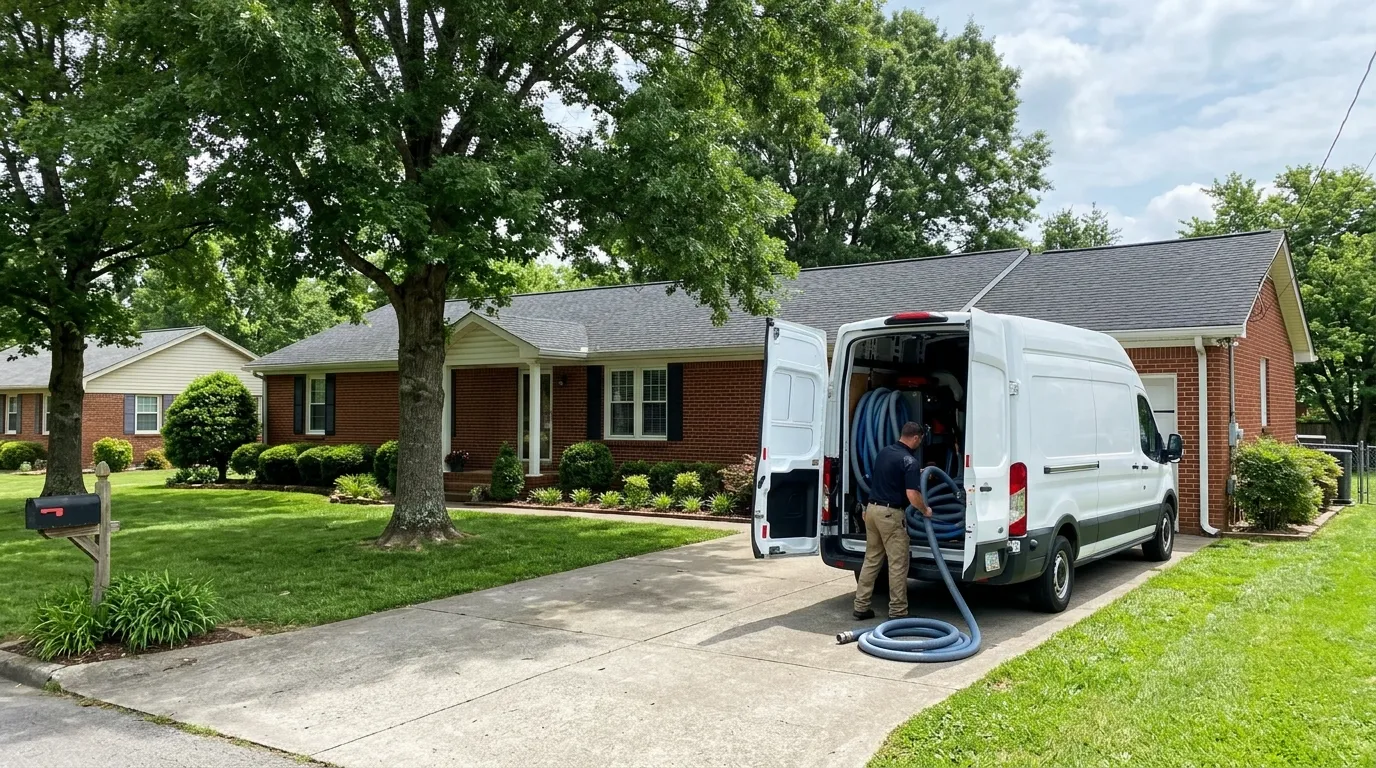
Crews isolate wet zones, shut off HVAC circulation, and pump out standing black water and sludge with truck-mounted vacuum units.
02
EPA-Registered Disinfection & Tear-Out
Technicians remove soaked carpet pad, ruined drywall, and wet crawl space insulation, then scrub hard slabs and framing with antimicrobial solutions.
03
Commercial Dehumidification & Odor Control
HEPA air scrubbers trap lingering sewer gases while low-grain dehumidifiers and axial fans dry wooden joists to safe moisture meter readings.
Protective Tyvek gear and commercial extraction wands clear contaminated water safely.HEPA air scrubbers and dehumidifiers neutralize sewer odors and dry exposed lumber.